Home / Architectural Metals

Folded metal roofs, cladding and trims.

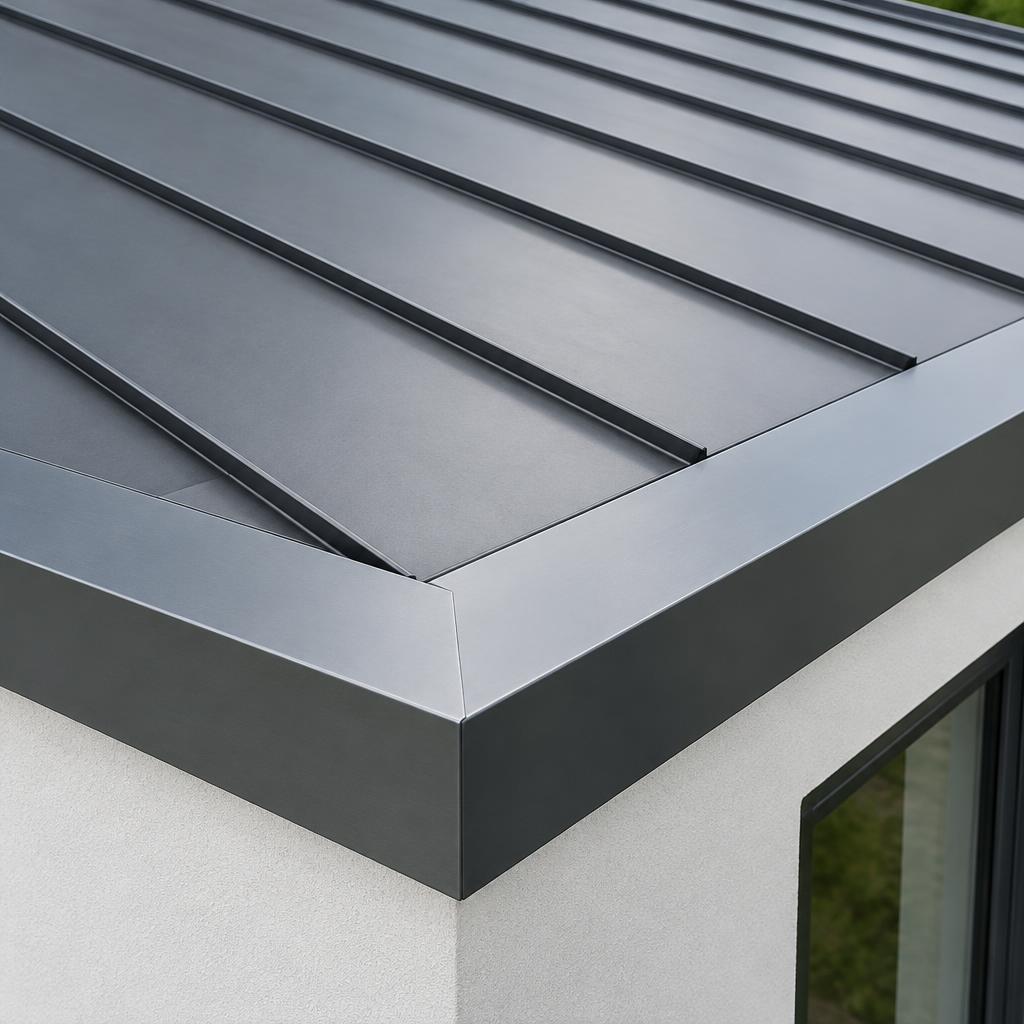
Standing seam roofs, façade cladding, parapet copings, fascias and bespoke flashings — formed, folded and fitted by our own crews.

Metals
Zinc · Copper · Alu
Min. pitch
3°
Life expectancy
60–100 years
Finish
Any RAL / patina

01Overview

Metal gives architects clean lines and a very long service life — if it's detailed correctly.

Standing seam metal is one of the few roof coverings that works equally well at 3° and vertical. Long panels run from eaves to ridge with no exposed fixings; edges are folded together into a raised seam that sheds water and allows the metal to expand and contract freely.

Each metal behaves differently. Zinc needs a ventilated or structured underlay to prevent corrosion from the underside; copper is heavy and moves more with temperature; aluminium is light and can be powder-coated to any colour. We advise on the right metal for the design, exposure and budget.

Beyond roofs, we fabricate and fit the details that define a building's edge — parapet copings, fascias, window surrounds, box gutters, chimney and dormer cladding, and lead or metal flashings.

We work from architect's drawings, produce our own setting-out where needed, and coordinate with window, cladding and structural trades so junctions are watertight and look deliberate.

02Where it's used

Typical applications

  • a.

    Standing seam roofs

    Low and pitched roofs on houses, extensions and civic buildings.

  • b.

    Façade cladding

    Vertical or horizontal seam cladding, flat-lock panels and shingles.

  • c.

    Parapet copings

    Folded copings with drips, falls and concealed jointing.

  • d.

    Fascias & soffits

    Crisp powder-coated aluminium eaves and verge trims.

  • e.

    Dormers & chimneys

    Zinc or copper cheeks and roofs on dormers and stacks.

  • f.

    Box gutters & outlets

    Lined gutters with overflow provisions and hidden outlets.

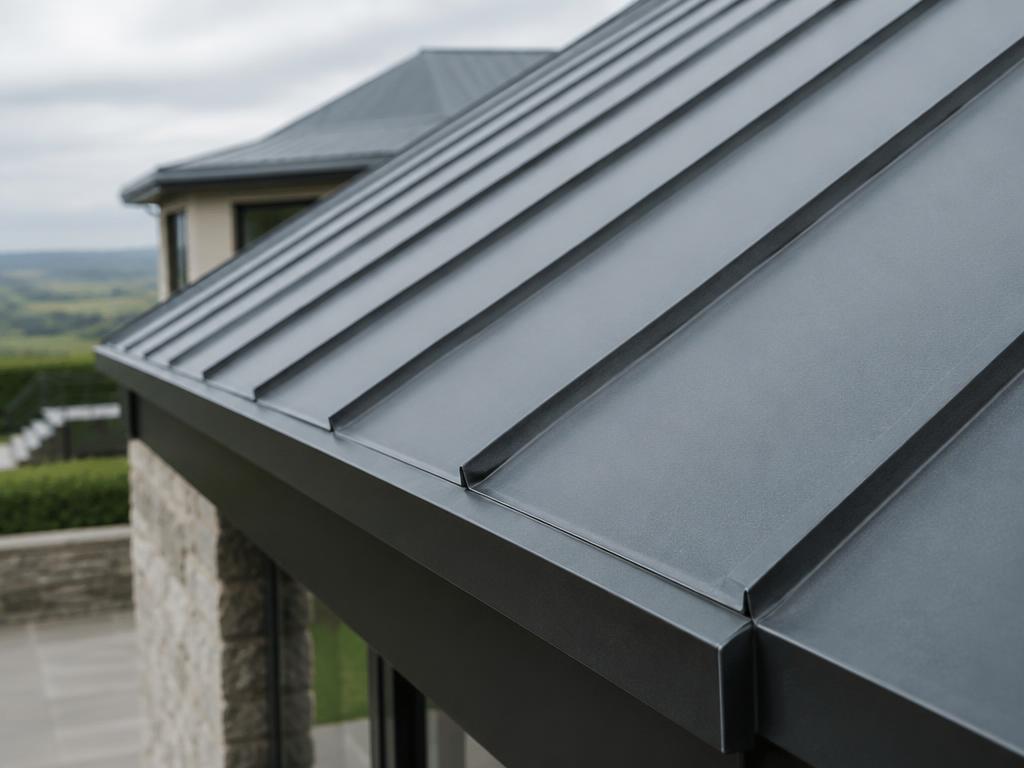
Standing seam zinc roof with crisp folded seams
a.Double-lock standing seam in pre-weathered zinc, eaves to ridge in one piece.
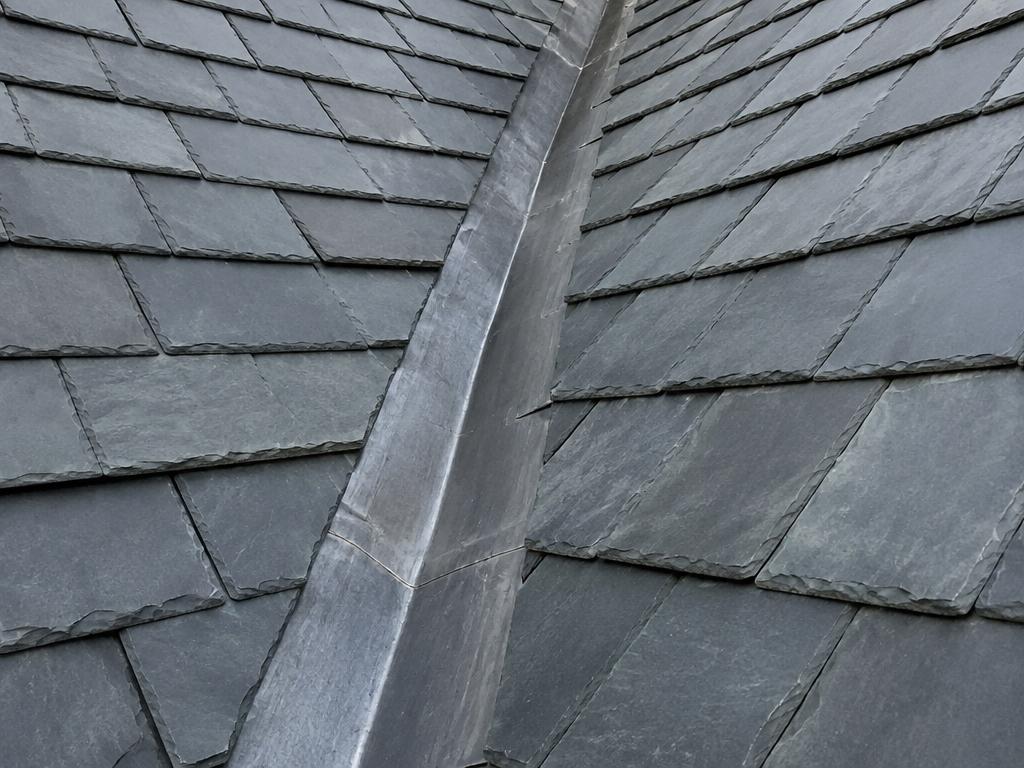
Lead valley between two slate roof slopes
b.Lead valley and soakers — the metalwork that keeps junctions watertight.

03Systems

Comparing roofing metals

MetalAppearanceWeightTypical lifeNotes
Pre-weathered zincMatt grey, self-patinating~7 kg/m²80–100 yrsNeeds underside ventilation or structured underlay
CopperBronze, ageing to green verdigris~6 kg/m²100+ yrsRun-off stains stone and glass; detail drips carefully
AluminiumPowder-coated in any RAL~3 kg/m²50–60 yrsLight, good for refurbishment and coastal sites
Coated steelFactory-coated colours~5 kg/m²30–40 yrsCost-effective for agricultural and commercial

04Detail

How it's built

Standing seam joint

How panels lock together without any exposed fixings.

123456
  1. 1

    Double-lock seam

    Panel edges are folded together twice so water can't track through.

  2. 2

    Metal tray

    Each panel runs eaves to ridge in one piece where possible.

  3. 3

    Fixed & sliding clips

    Hidden clips hold the panel and allow thermal movement.

  4. 4

    Structured underlay

    Separation and drainage layer, essential under zinc.

  5. 5

    Timber or ply deck

    Continuous substrate for the clips.

  6. 6

    Insulation

    Warm roof build-up beneath the deck.

Common failure points

  • Zinc laid directly on timber without underlay
  • Clips that don't allow for expansion
  • Pitch too low for the seam type chosen
  • Dissimilar metals in contact causing corrosion

05Process

From survey to handover

  1. 01

    Design review

    Check pitches, panel lengths, junctions and substrate against the drawings.

  2. 02

    Setting out

    Panel layouts and trim drawings for approval before fabrication.

  3. 03

    Fabrication

    Panels and trims formed to measured sizes.

  4. 04

    Installation

    Clips, underlay and panels fixed and seamed on site; final inspection.

06Specification

Notes for architects & QS

Minimum pitch
3° for double-lock standing seam; 7° recommended for single-lock or angled seam.
Panel length
Limited by thermal movement — typically 10m for zinc and copper, up to 16m with sliding clips.
Substrate
Ventilated timber boarding or ply/OSB with structured separation underlay.
Copings
Minimum 5° fall to the inner face, 50mm drip, concealed joint bands.
Fixings
Stainless steel, compatible with the panel metal to avoid galvanic corrosion.
Warranty
Manufacturer material warranties available, subject to approved installation.

Guidance figures only — final details are confirmed against manufacturer literature and the project engineer's design.

07FAQ

Common questions

Can metal be used on a very low pitch?

Yes. Double-lock standing seam works down to 3° with the right underlay and detailing.

Is a metal roof noisy in the rain?

Not on a fully boarded, insulated deck. It sounds no different from any other roof inside the building.

Will zinc go white?

Pre-weathered zinc develops a protective patina. Light streaking can appear early on and evens out over time.

Can you match window frame colours?

Aluminium trims and cladding can be powder-coated in any RAL colour, including textured and metallic finishes.

Do you work from architect's details?

Yes. We review details at tender stage and can suggest changes that improve buildability without changing the design intent.

Have drawings or a roof that needs attention?

Send plans, photos or a short description. We'll review it, visit if needed, and come back with an itemised price and programme.